

Don't Write Before You Draw the Map! (The Digital Content Compass and Guide to the Summit)
Digital Content by Wejdan
1/1/20263 min read
Welcome to (The Digital Content), your destination for mastering the art of creating content that drives results.
In a world where the internet pumps out thousands of tweets, articles, and videos every minute, success no longer belongs to the most beautiful content, but to the most strategic content. If you are thinking of launching your new website or blog, you must always start with a "Compass."
1. What is Digital Content? (Conceptual Summary)
Simply put, digital content is any information that can be stored, processed, or distributed electronically.
It's not just the article you are reading now. Digital content includes text, images, videos, audio, infographics, and even emails. It is the tool that transmits your brand, builds trust, and shapes the entire digital experience for your audience.
For a comprehensive definition: You can review this guide on the Digital content: what it is and how to create it effectively Hygraph
2. What is the Digital Content Compass?
The Digital Content Compass is the framework that directs your creative efforts towards achieving your business goals. Instead of random publishing, the Compass provides you with a clear action plan that answers three crucial questions:
Why are we publishing? (Defining goals: Is it to increase awareness, sales, or build loyalty?)
Who are we publishing for? (Understanding the target audience and their needs).
How are we publishing? (Choosing the right channels and defining content types).
For building your strategy: Content strategy is the "why" behind content creation. You can start by reviewing the Digital Content Creation: Ultimate Guide to Content Strategy to understand the core elements.
3. The Core of the Compass: The Three Golden Circles of Intent
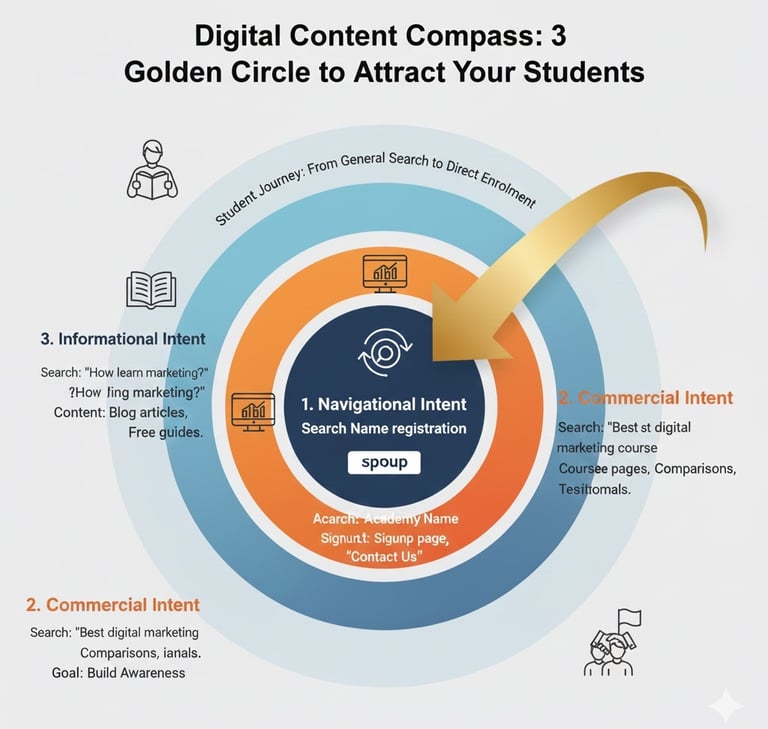
The Compass's most important function is to guide you towards content types that cover all stages of the customer journey. For this, we adopt the Golden Circles of Intent model, which classifies searchers based on their "Search Intent."
Your new website must contain content dedicated to each of these three circles:
[Insert the Diagram of the Three Golden Circles Here]
(Please use the final English diagram provided in the previous turn here as the visual representation of this concept.)
In this visual framework, successful content works on a gradual path:
The Outer Circle (Informational): Targets people searching for general solutions to their problems (to build awareness).
The Middle Circle (Commercial): Targets people comparing products and solutions (to build interest).
The Inner Circle (Navigational): Targets people who already know you and want quick access (to facilitate the purchase or communication process).
4. The Compass and SEO: Your Guide to the Summit
When you place your content strategy within the Digital Marketing Compass framework, you ensure that every word you write has a purpose. This is where Search Engine Optimization (SEO) comes in:
SEO is your guide that ensures your ship (your website) reaches the desired summit in search engines.
Instead of just focusing on random keywords, SEO within this framework means:
Understanding Intent: Knowing the true intent behind user searches in each of the Golden Circles.
Setting Direction: Using search data to prioritize which topics (Outer Circle) should be covered first in your blog to attract the largest number of new audiences.
Focusing Effort: Ensuring the content, you create in the inner and middle circles provides a complete answer to the user, increasing the chances of retention and conversion into a loyal customer.
Without a Compass, your efforts will be like wandering in the desert without direction. But with a clear strategy, SEO becomes the indicator that measures your proximity to your goal.
Read More: To understand how SEO works as part of the larger strategy, you can review this What Is SEO Content? A Guide to Creating Content for SEO
Are you ready to map out the first content plan for your new website? Follow us in the next blog post where we will start defining the goals and starting points for our strategic journey.